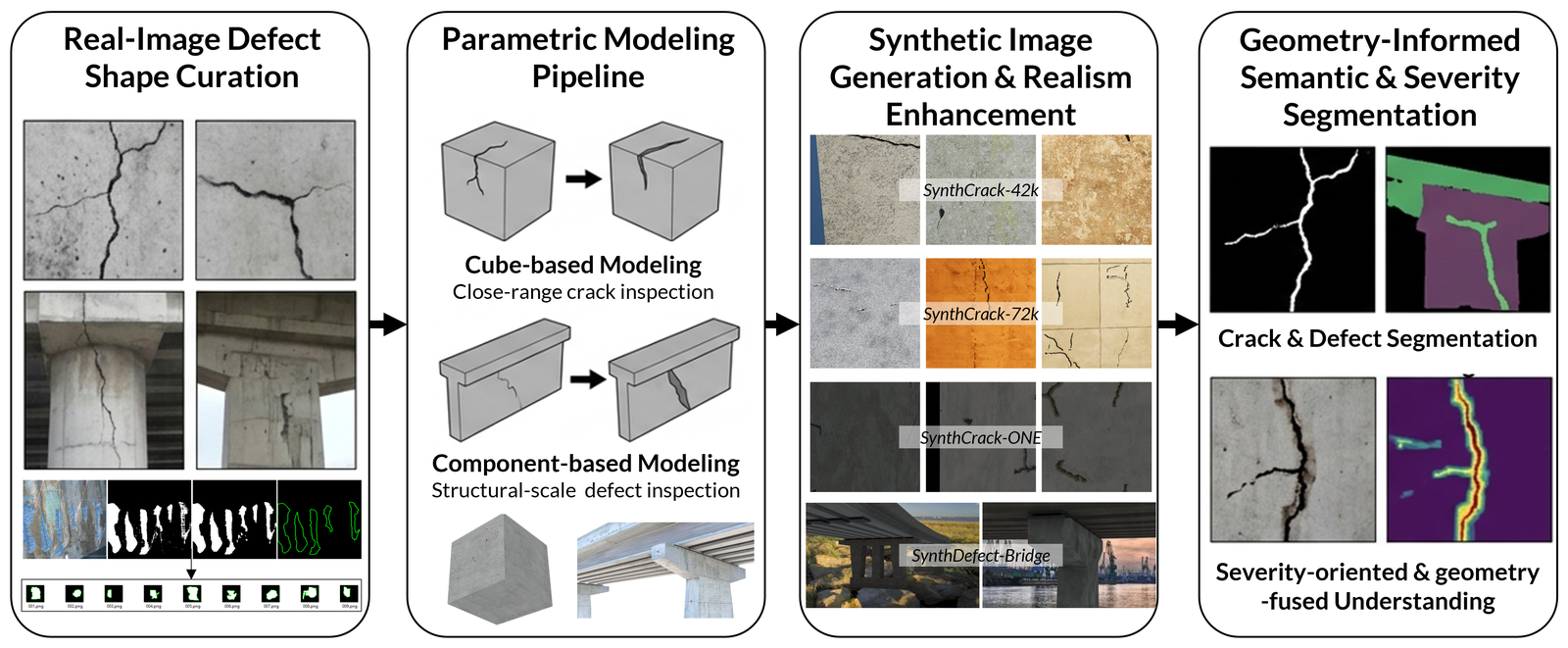
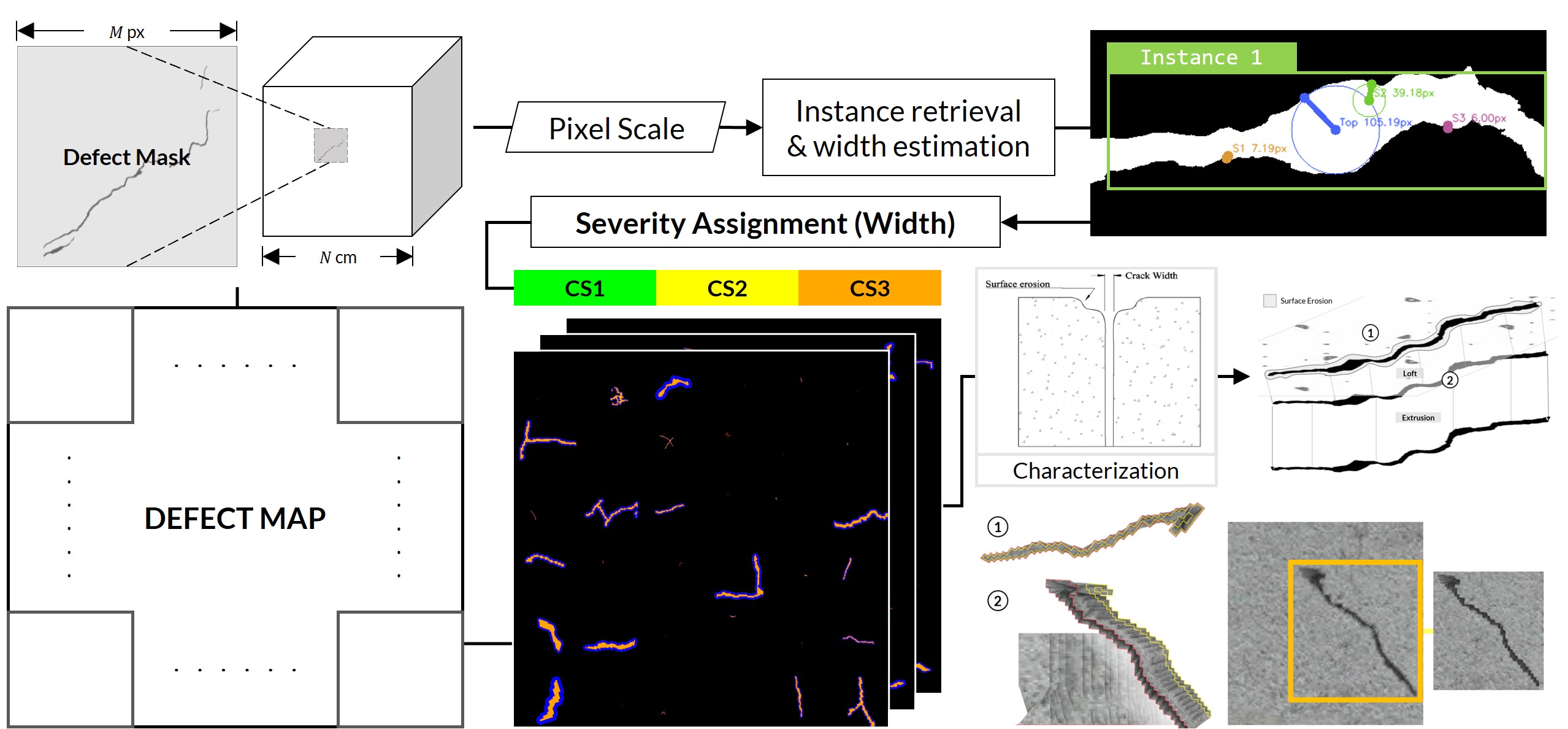
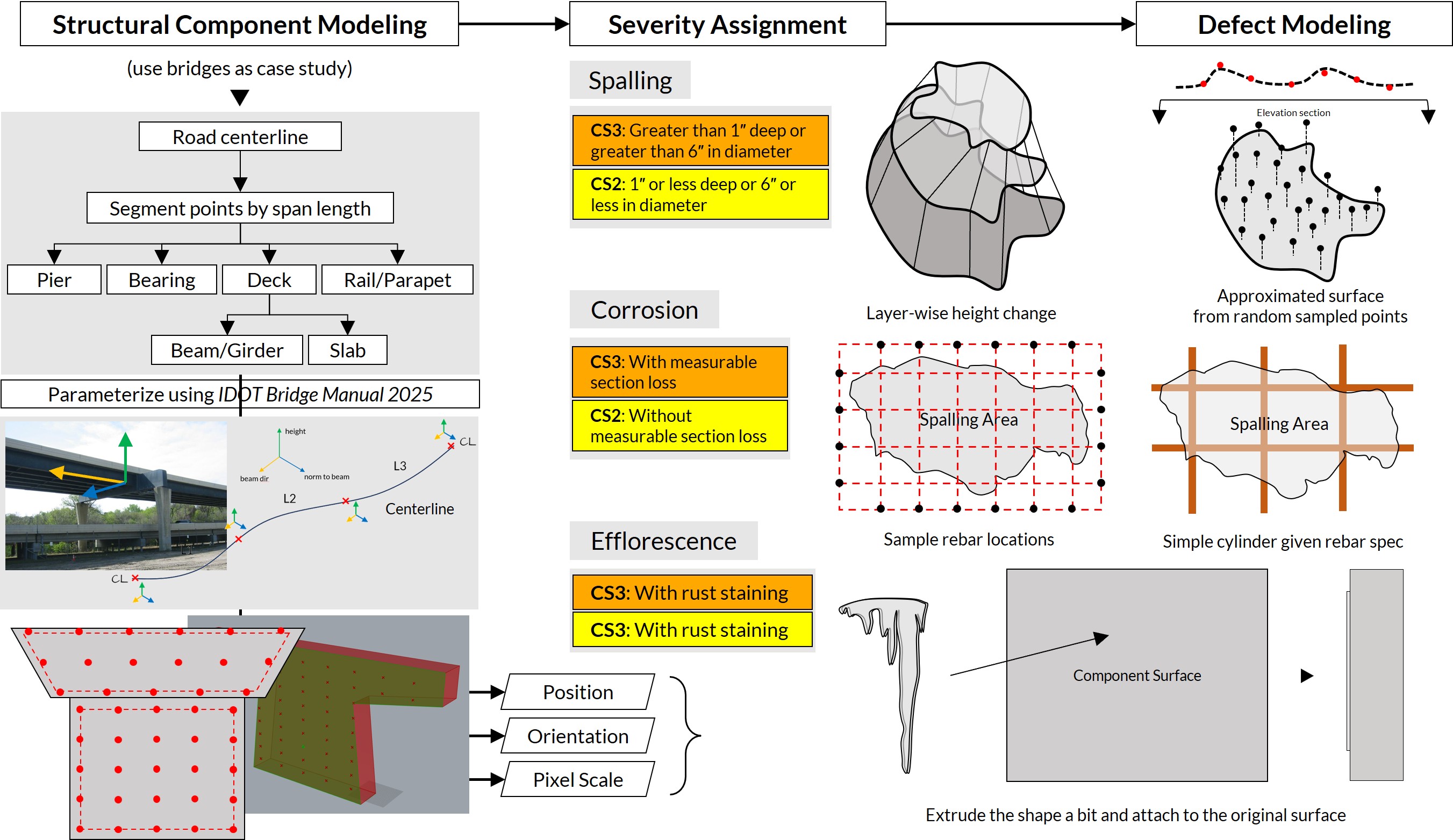
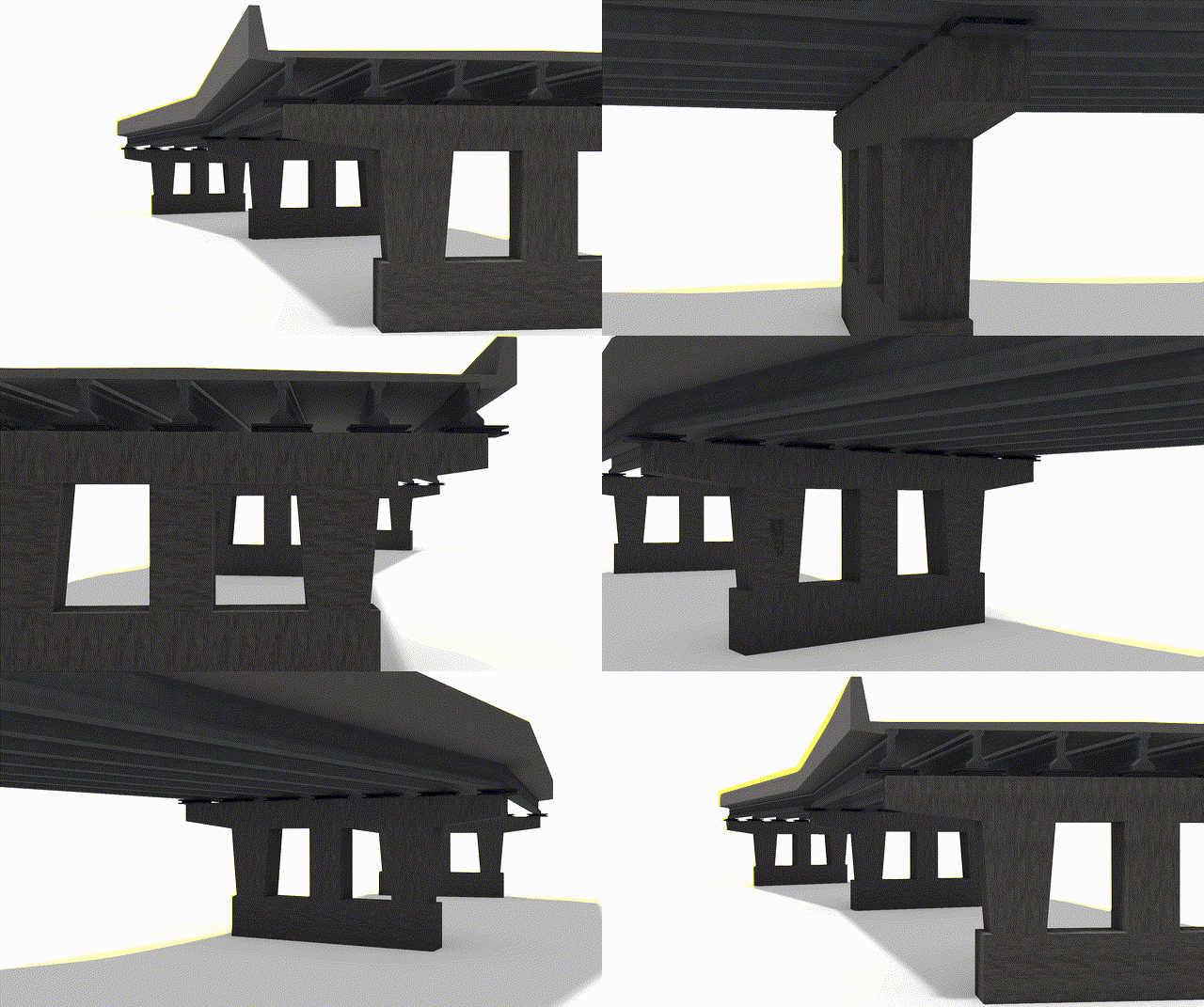
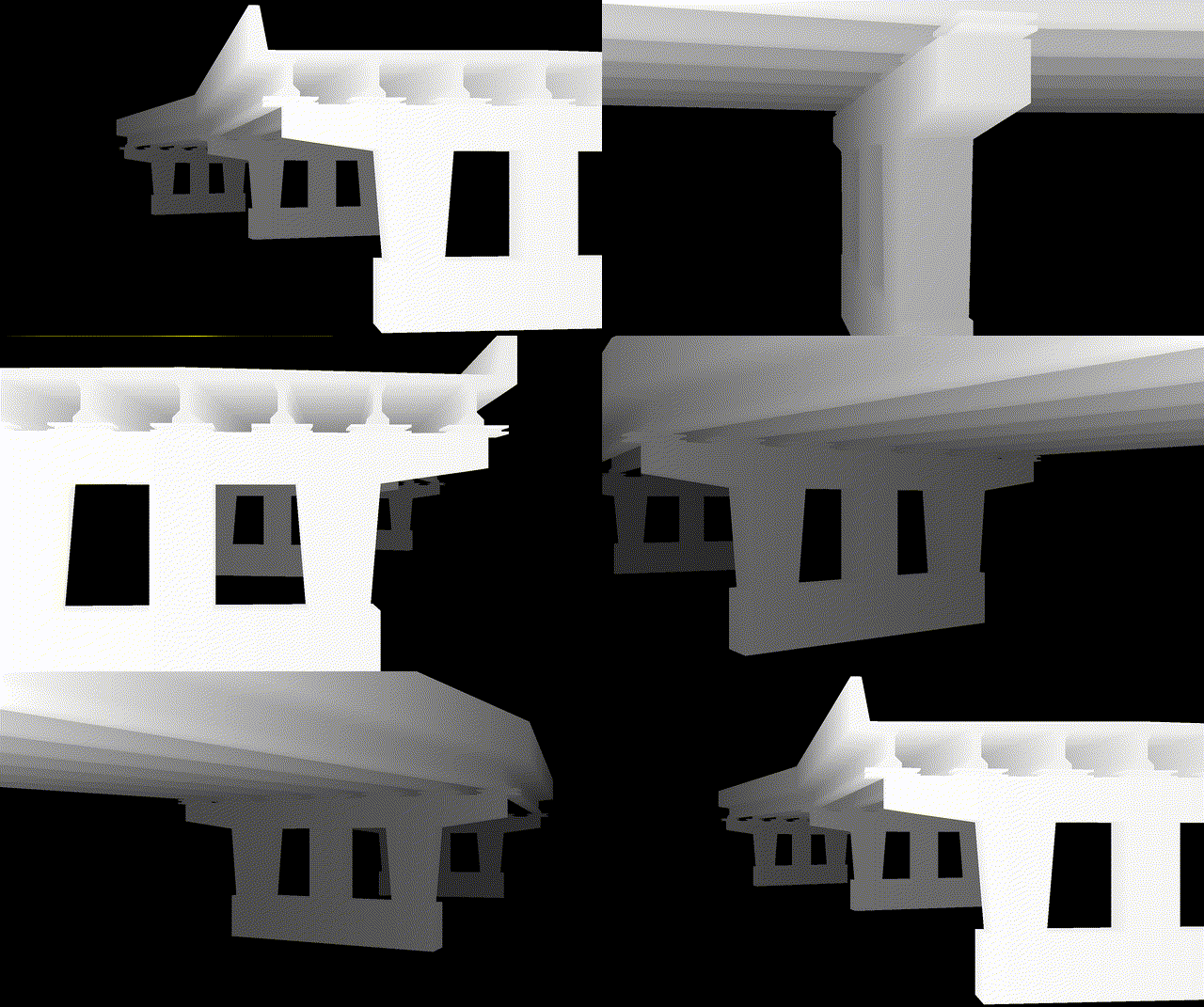
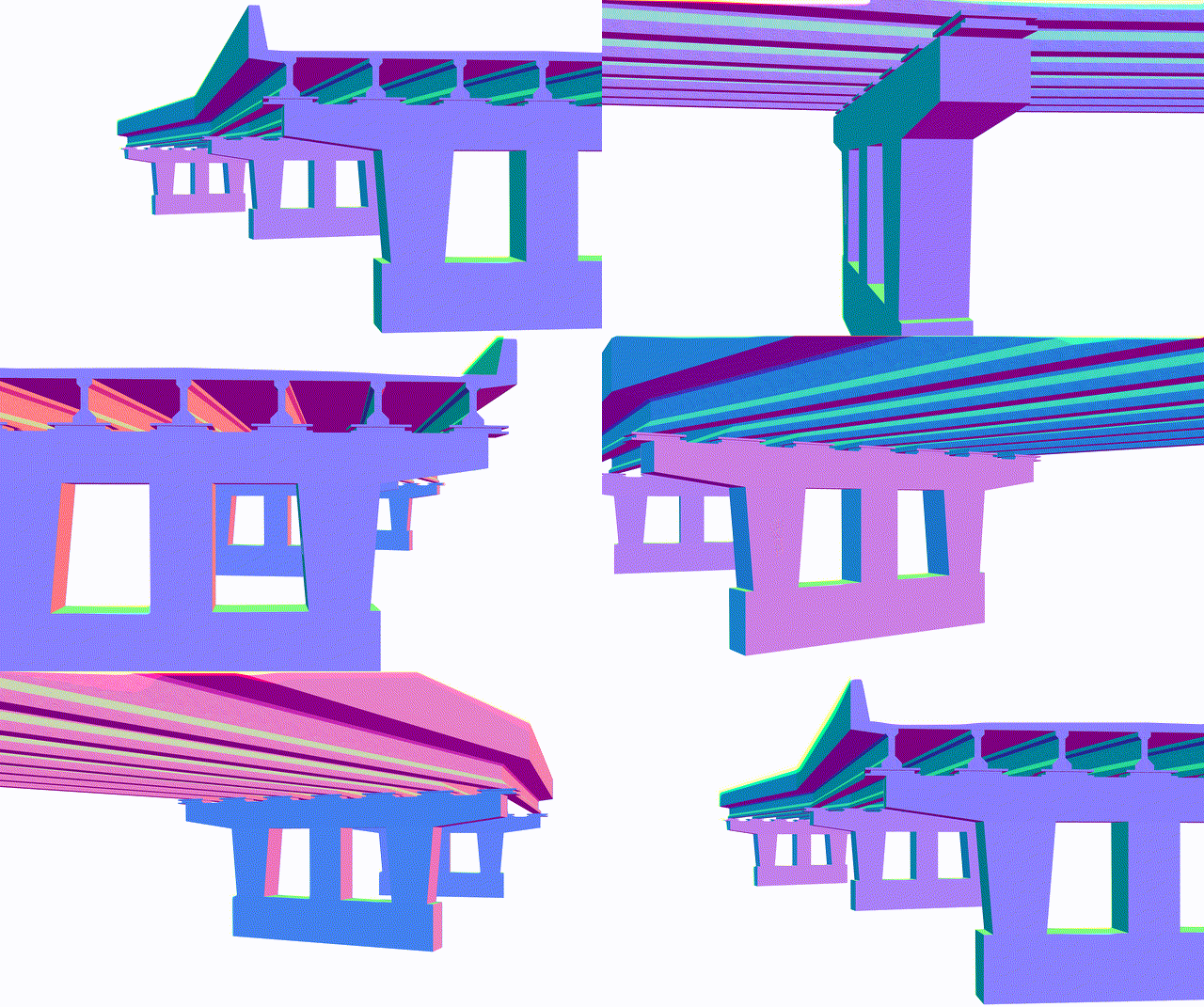
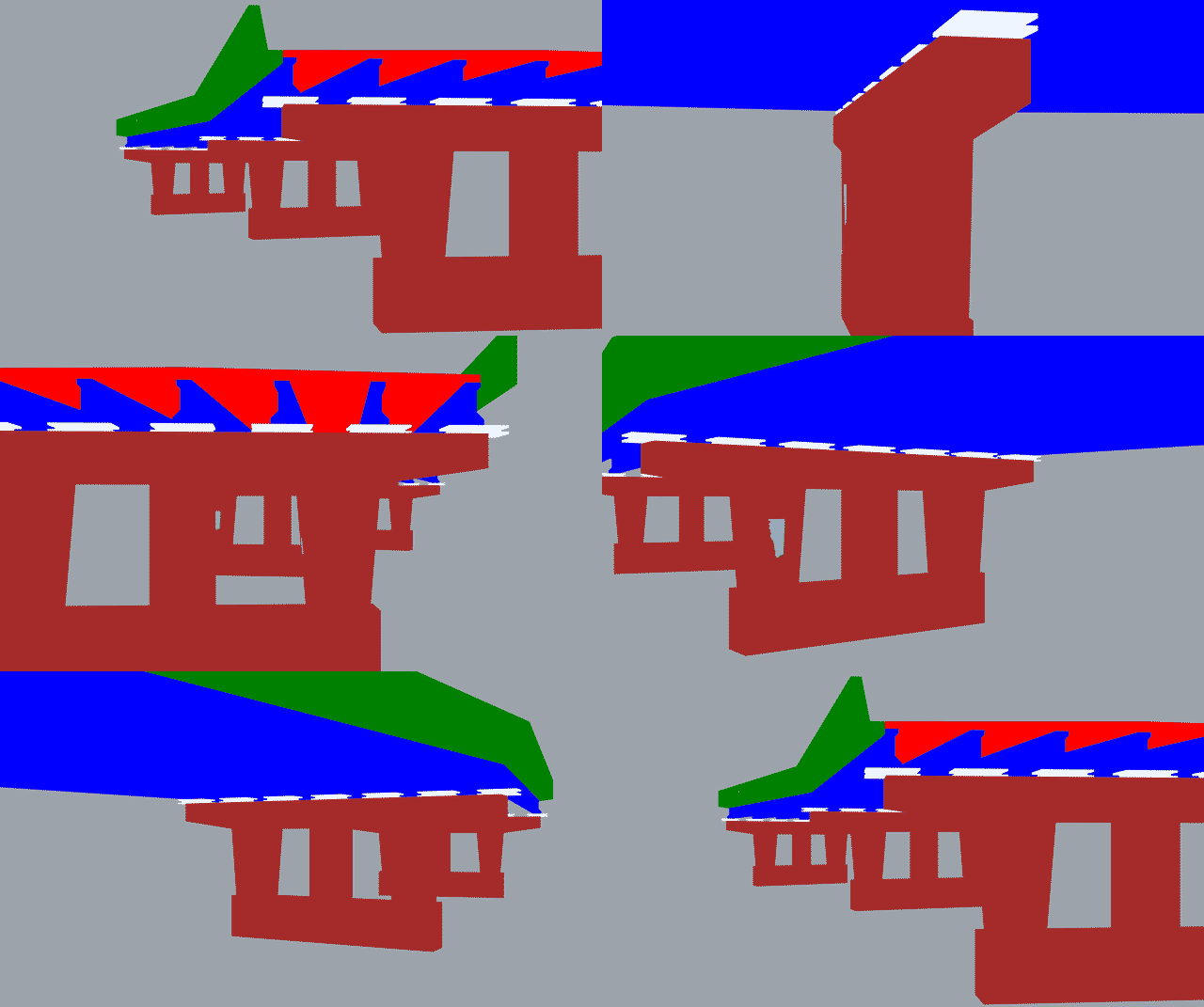
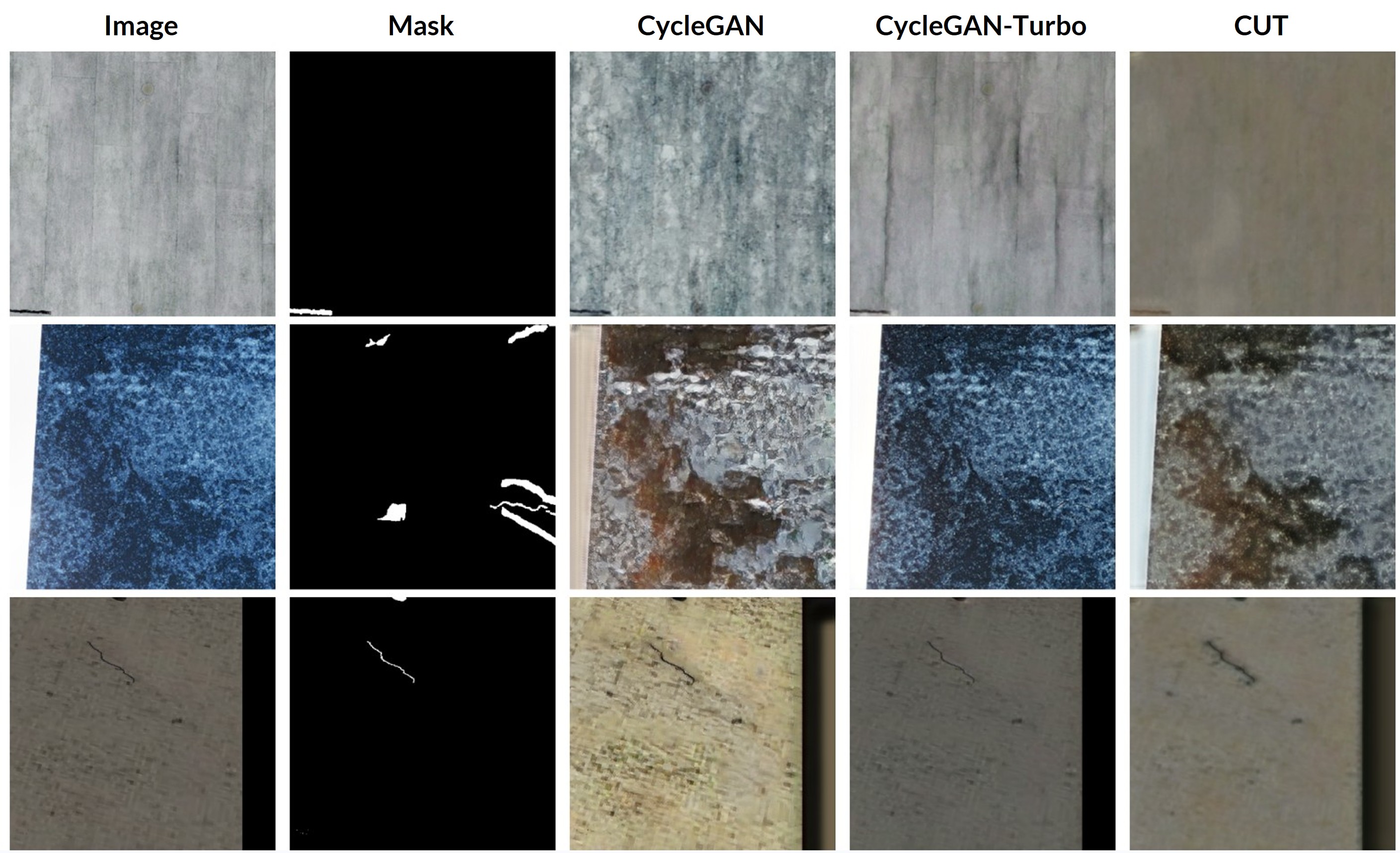
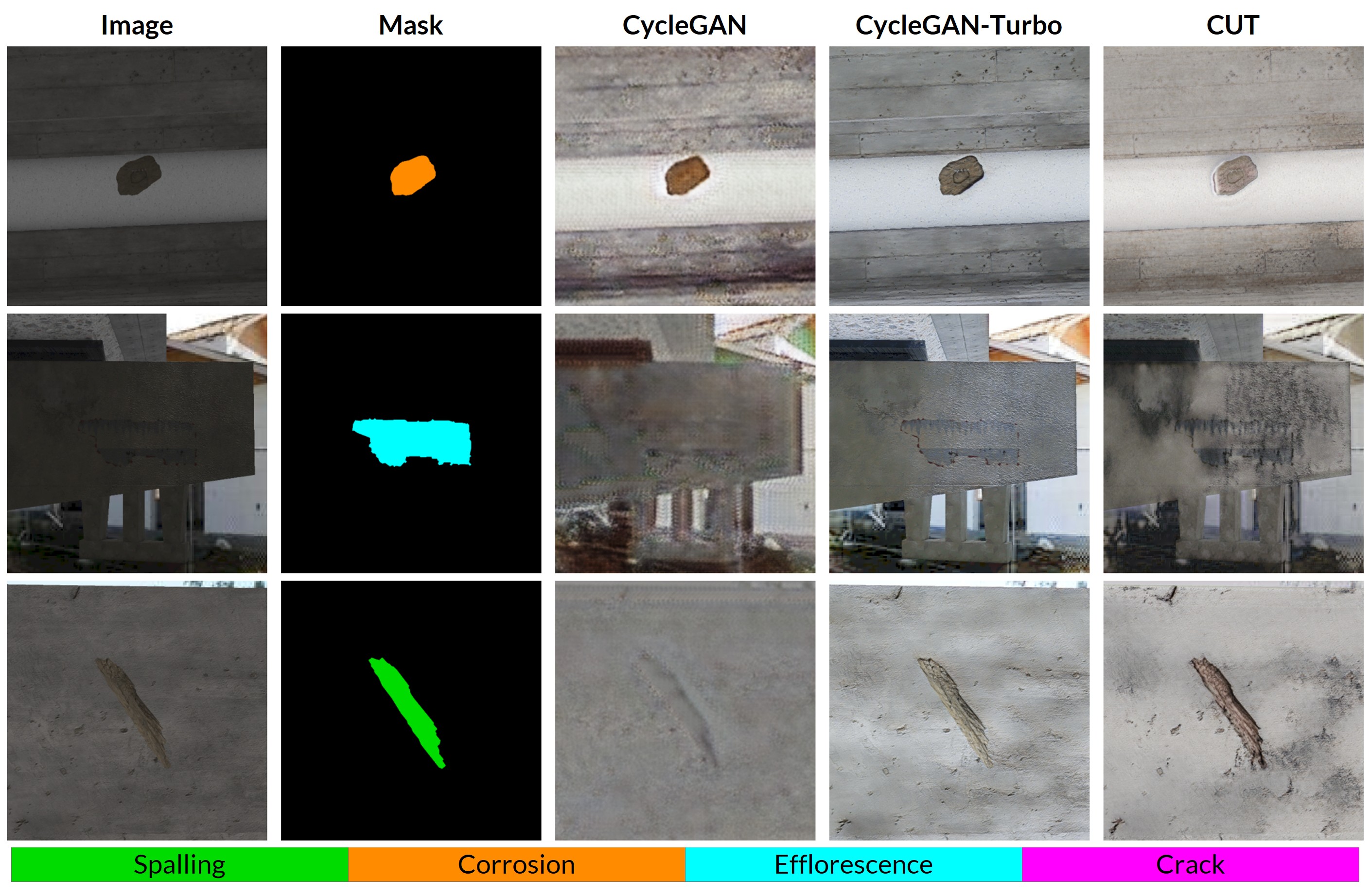
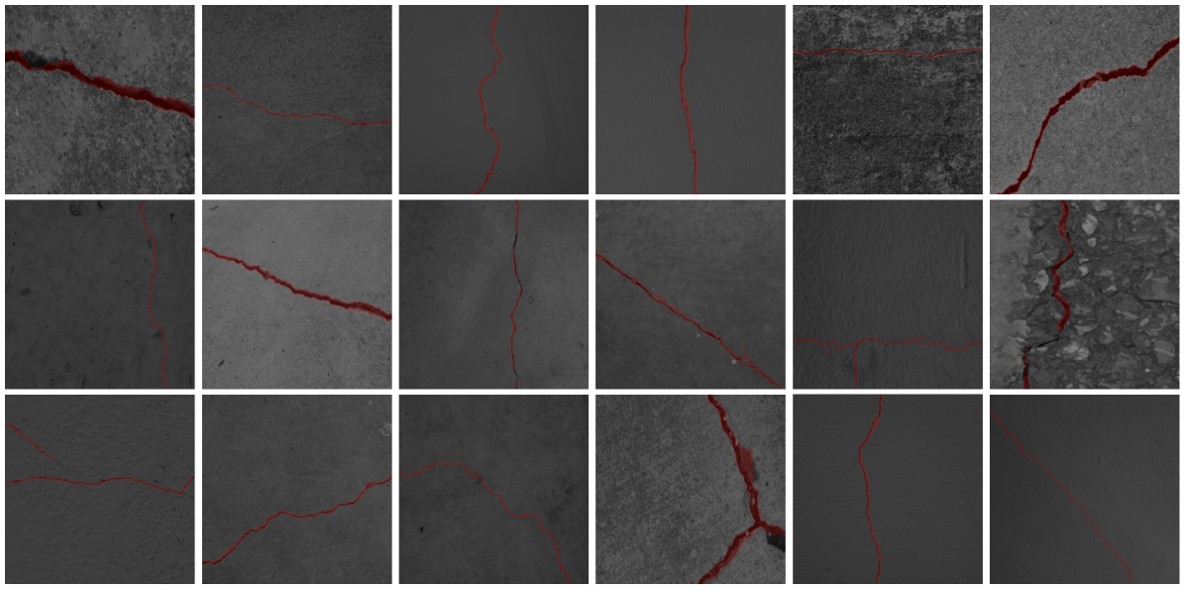
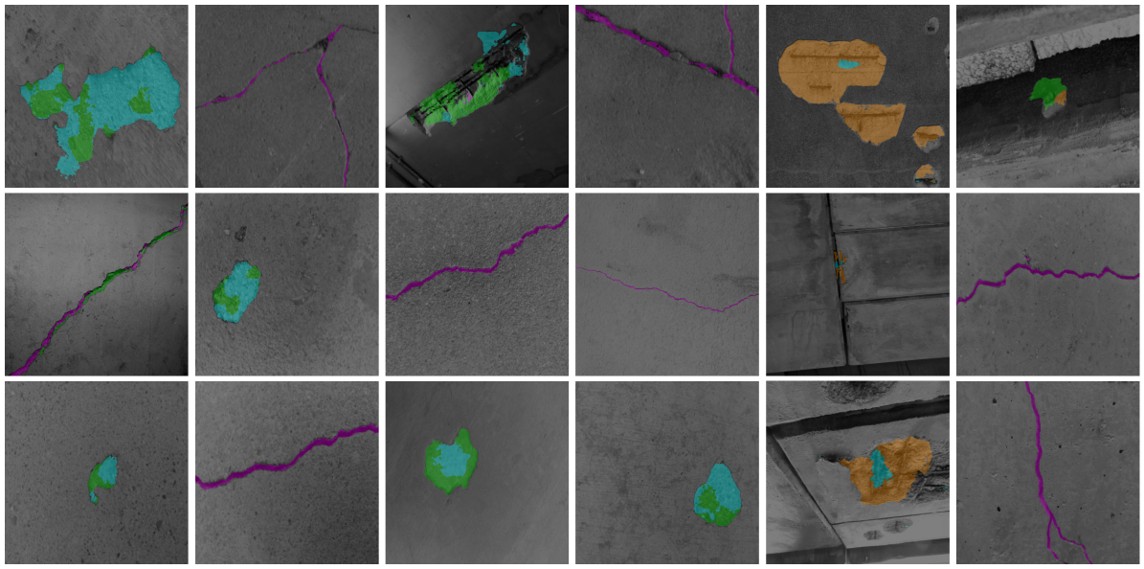
Computer vision-based concrete condition assessment has largely focused on crack detection, as existing datasets lack multi-defect coverage and geometry-grounded severity labels. A two-fold contribution is presented. First, a geometry-informed synthetic image generation pipeline is developed to convert real defect shapes into parametric 3D models, supporting scalable rendering of diverse defects with paired RGB, depth, and surface-normal modalities. The pipeline is extensible and supports future modeling needs beyond the defect classes considered in this work. Second, a large-scale synthetic dataset with automatic annotations is established, jointly encoding semantic defect categories and geometry-informed cues, facilitating severity-aware training and evaluation across cracks, spalling, corrosion, and efflorescence. Building on this data, this paper proposes a geometry-informed teacher--student framework that leverages geometric modalities during training while maintaining RGB-only inference, allowing the application to both close-range crack inspection and structural-scale assessment. To our knowledge, this represents the first scalable framework to unify real-shape-grounded synthetic generation, geometry-informed learning, and severity-oriented concrete condition assessment, while enabling systematic training and benchmarking for non-crack defects.